The Constitution of Nepal was promulgated on 20 September 2015 (3 Ashoj 2072 BS), after a long process that began with the 2006 peace agreement and the Constituent Assembly. It declares Nepal a federal democratic republic and a secular state. This article gives a plain overview that is useful for general knowledge and for Loksewa-style exams.
Numbers such as seats and local units are given as commonly stated. Laws and boundaries can be amended, so confirm exact figures and article numbers from the constitution itself or an official source before using them in an exam answer.
1. A federal state with three levels
Nepal's state power is shared among three levels: the federal, provincial and local governments. Each has its own powers, and some powers are shared. The constitution lists them in schedules.
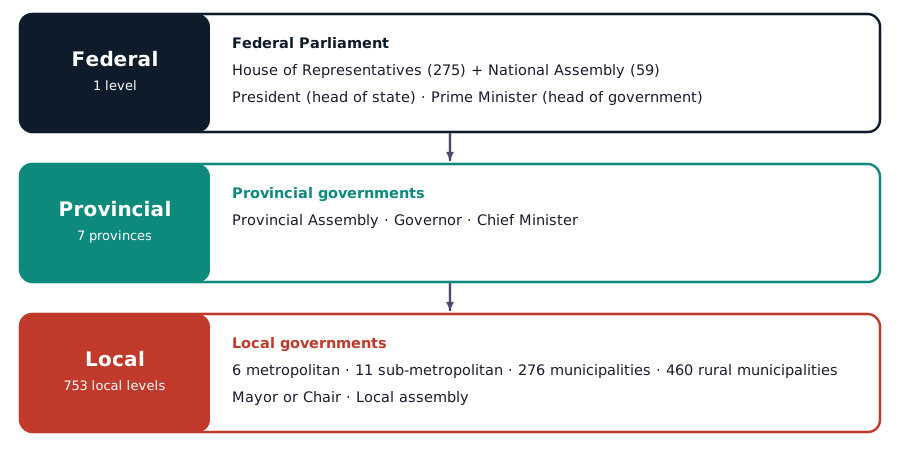
Figure: the three levels of government under the 2015 constitution (numbers are approximate; check official sources).
2. The three organs of the state
As in most democracies, the state has three organs. The legislature makes laws, the executive carries them out, and the judiciary interprets them and settles disputes. The figure shows the main bodies in each.
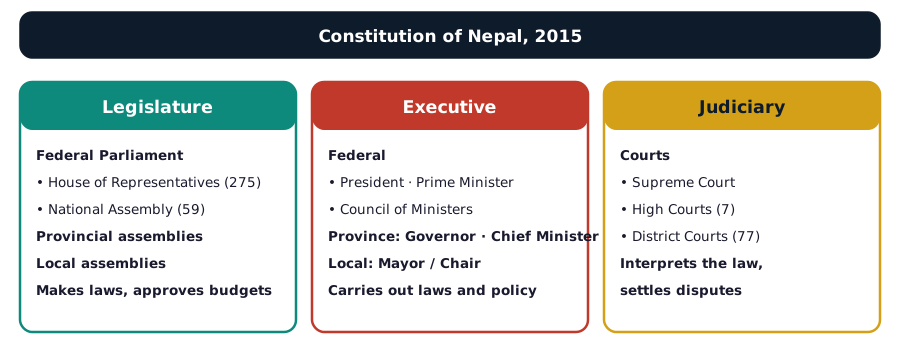
Figure: the three organs of the state and the main bodies in each.
3. Key facts at a glance
| Topic | What the constitution provides (as commonly stated) |
|---|---|
| Promulgated | 20 September 2015 (3 Ashoj 2072 BS) |
| Form of state | Federal democratic republic, secular |
| Provinces | 7 |
| Local levels | 753 (6 metropolitan, 11 sub-metropolitan, 276 municipalities, 460 rural municipalities) |
| Federal Parliament | House of Representatives (275 members) and National Assembly (59 members) |
| Head of state | President |
| Head of government | Prime Minister |
| Courts | Supreme Court, High Courts and District Courts |
4. Parliament in a little more detail
- The House of Representatives has 275 members: 165 elected directly (first-past-the-post) and 110 through proportional representation.
- The National Assembly is the upper house with 59 members, including members elected by provincial and local representatives and a few nominated.
- The leader who can command majority support in the House normally becomes Prime Minister.
5. Fundamental rights and duties
Part 3 of the constitution lists fundamental rights, such as the right to freedom, equality, the right to education, health, food, employment, and the right against exploitation. Citizens also have duties, such as protecting national unity, paying taxes and safeguarding public property. Remember the Directive Principles, which guide the state but cannot be directly enforced in court.
6. Constitutional bodies
Independent bodies help keep government accountable. Examples include the Commission for the Investigation of Abuse of Authority, the Office of the Auditor General, the Public Service Commission (Loksewa Aayog), the Election Commission and the National Human Rights Commission.
7. Amending the constitution
The constitution can be amended, usually through a special majority in parliament, and some parts that relate to its basic structure are harder to change. The detailed procedure is in the constitution itself.
Tips for exam preparation
- Learn the structure first (three levels, three organs), then the numbers.
- Make a one-page table of constitutional bodies and what each does.
- Read recent amendments and important court decisions in news.
- Practise MCQs on polity regularly and review the ones you miss.

Comments
Loading comments…