Medicine is not only about doctors. A hospital depends on nurses, pharmacists, laboratory staff, public health workers and many more. After +2 Science with Biology, you have several good options. This guide helps you compare them.
Duration, entrance exams, seats, fees and registration rules change. Always confirm current details with the relevant university, the National Medical Education Commission and the professional council before you apply.
The main paths
The figure below shows the common paths and the council that registers each profession. Registration (a licence) is what lets you work legally in that profession.
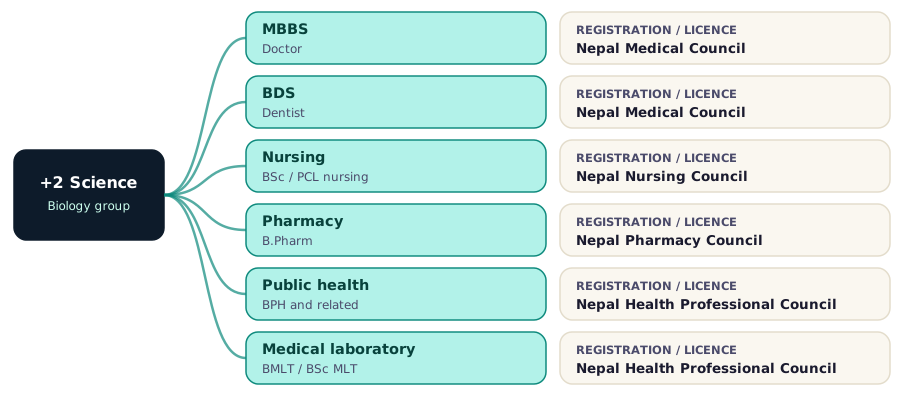
Figure: common health careers after +2 Science and the council that registers each. Check current rules.
Compare the options
| Career | Programme (approx. length) | What you do |
|---|---|---|
| Doctor | MBBS, about 5 to 6 years including internship | Diagnose and treat patients; can specialise later |
| Dentist | BDS, about 5 years | Care for teeth, gums and oral health |
| Nurse | BSc nursing about 4 years; PCL nursing about 3 years | Patient care in hospitals, clinics and communities |
| Pharmacist | B.Pharm, about 4 years | Medicines, dispensing, quality and advice |
| Public health professional | BPH and related, about 4 years | Prevention, community health programmes, policy |
| Medical laboratory technologist | BMLT or BSc MLT, about 3 to 4 years | Run tests that help diagnose disease |
Other paths worth knowing
- Physiotherapy, radiography, optometry, anaesthesia assistant and other allied health programmes are growing and have regular demand.
- Ayurveda and other traditional medicine programmes exist, with their own councils and rules.
- Health care management and research suit those who prefer organising and studying health systems.
- Veterinary and agriculture sciences are related fields for those who love biology but prefer animals and plants.
How to choose
- Be honest about the commitment. Medicine takes many years, long hours and strong emotional resilience.
- Look at the whole path, not only the first degree: specialisation, licence exams and working life.
- Check the college. Make sure it is recognised and approved for the programme.
- Count the cost and ask about scholarships or quota seats, which some programmes offer.
- Keep a backup. Seats are limited and competitive, so decide a second choice, for example a related allied health programme.
Prepare for the entrance
Entrance tests are mostly multiple-choice questions on Biology, Chemistry, Physics and sometimes English. Practise regularly with timed tests, focus on understanding rather than memorising, and review the questions you get wrong. The practice tests on MeroSir can help you build speed and accuracy.


Comments
Loading comments…