IT is one of the few fields where what you can build often matters as much as your certificate. That is good news if you are starting from zero, but it also means you need a plan. This roadmap gives you one.
1. Understand the main tracks
"IT" covers many different jobs. You do not need to choose forever, but it helps to know the options:
- Web development: websites and web apps, both what users see and the servers behind them.
- Mobile apps: Android and iOS apps, or cross-platform tools.
- Data and AI: analysing data, dashboards, and machine learning.
- Cloud and DevOps: running and deploying software reliably.
- Cybersecurity: protecting systems and finding weaknesses.
- Software testing (QA): checking that software works before users see it.
2. The roadmap
Start with computer basics and English, learn one programming language and basic tools, pick a track, build projects, then look for an internship or freelance work.
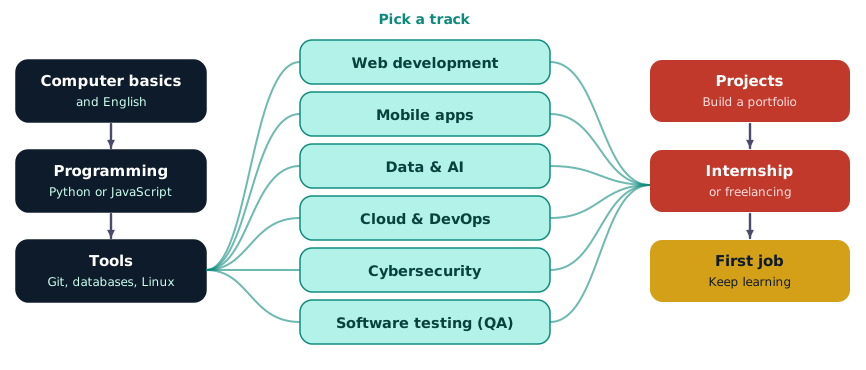
Figure: one possible route into IT. Most people pick a track after learning the basics.
3. Degrees you can consider in Nepal
You can learn IT without a degree, but a degree helps with many employers, visas and further study. Some common routes are listed below; programme names, duration and entry rules differ by university and college, so check the current details.
| Programme | What it is | Roughly how long |
|---|---|---|
| BE Computer / Software / IT | Engineering degree, often with an engineering entrance exam | About 4 years |
| BSc CSIT | Computer science and information technology at Tribhuvan University | About 4 years |
| BCA | Computer applications, more application-focused | About 4 years |
| BIT / BIM | Information technology or information management programmes | About 4 years |
| Diploma / short training | Shorter, skills-focused courses | Months to a few years |
4. Skills to learn first
- One programming language well. Python and JavaScript are common starting points.
- Problem solving. Practise small logic problems so you can break a task into steps.
- Git and GitHub to save and share your code.
- Databases and SQL. Almost every application stores data.
- English. Documentation, tutorials and teamwork are mostly in English.
5. Build a portfolio
Employers want proof. Build three or four small but complete projects: a personal website, a simple app with a login, a small data analysis. Put them on GitHub with a clear description. A short, finished project beats a big unfinished one.
6. Getting your first work
- Internships. Many companies take interns. Apply with your portfolio, not just a CV.
- Freelancing. Online platforms let you find small jobs. Start small and build reviews. Rules on receiving foreign payments can change, so check current banking and tax rules.
- Communities and events. Meetups, hackathons and open-source projects help you learn and meet people who hire.
Keep learning
Technology changes quickly. Make a habit of learning a little every day, and do not be discouraged if progress feels slow in the first months. Salaries and demand vary by company, skill and economy, so avoid promises from anyone selling a course. Judge any course by what you can build after it.
Comments
Loading comments…