Nobody sits you down in school and teaches how to manage money. You learn by watching your family, making mistakes and, sometimes, getting caught by a bad deal. This guide gives you the basics in plain language: how to budget, where to keep your savings, how investing works, and how to avoid the traps that catch new earners in Nepal. It is not financial advice for your exact situation, but it will help you ask better questions.
Interest rates, tax rules, fees and the rules of banks and markets change often, sometimes every fiscal year. Numbers are deliberately left out or approximate here; check the current figures with your bank, the regulator or an official source before you decide.
1. Start with a simple budget
A budget is just a plan for where your money goes, made before you spend it. A popular rule of thumb is to divide your income roughly into needs (rent, food, transport, fees), wants (eating out, phone data, shopping, fun) and savings. A common starting split is about half for needs, a smaller share for wants and a meaningful share for saving. Your numbers will differ, and that is fine; the habit matters more than the split.
- Track for one month. Write down every expense in a notebook or phone app. Most people are surprised by small leaks, such as daily snacks and subscriptions.
- Pay yourself first. When money arrives, move your savings share away immediately instead of saving "whatever is left".
- Review monthly. Adjust when your income or costs change.
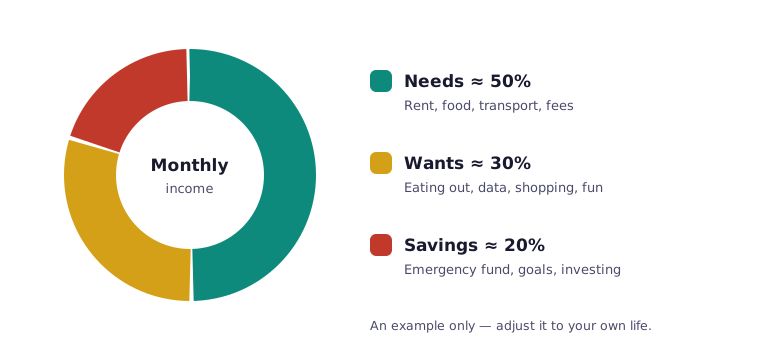
Figure: a simple 50/30/20 split of monthly income, only an example to start from.
2. Understand how banks work
Nepal's central bank, the Nepal Rastra Bank, regulates the banking system. Banks and financial institutions come in different kinds, such as commercial banks, development banks, finance companies and microfinance institutions, with different sizes, services and risk profiles. For a student or new earner:
- Open a savings account in your own name. Compare interest rates, minimum balance and fees, and check that the institution is licensed.
- Use mobile banking and digital wallets carefully. Never share your PIN, password or OTP with anyone, even someone who claims to be from the bank.
- Consider a fixed deposit for money you will not need for a set period; it usually pays a higher rate than ordinary savings.
3. Build an emergency fund first
Before you invest, keep a cushion for surprises such as illness, a lost job or a family emergency. A common guideline is to save enough to cover a few months of essential expenses. Start with a small target, for example one month, and grow it. Keep it somewhere safe and easy to reach, such as a savings account, not in risky investments.
4. Investing: the basics
Investing means putting money to work so it can grow, with some risk. The main rule: higher potential returns come with higher risk, and no one can promise a safe, high return.
- Fixed deposits and bonds: lower risk, steadier but modest returns.
- Mutual funds: you pool money with others and a licensed fund manager invests it in a mix of assets. It can be a convenient way to start small.
- Shares: you buy part ownership of a listed company through the stock market, using a demat account and a licensed broker; applying for new share issues (IPOs) is usually done through an online system run for the purpose. Share prices can fall as well as rise, so learn first and start with small amounts.
- Retirement and long-term schemes: if you are employed, check provident fund, the Social Security Fund or other long-term savings options that your employer offers or that exist nationally.
Golden rules: never invest money you will need soon, never borrow to invest, spread your money across different things, and do your own research instead of following tips from friends or social media.
5. Insurance: protecting what you have
Insurance transfers a big, unlikely loss to a company in exchange for a regular premium. The two broad types are life insurance (which pays your family if something happens to you) and non-life insurance (health, vehicle, property and so on). Some life policies mix saving and cover, and the cost of that mix can be high, so compare carefully, read the terms, and buy only what you understand from a licensed company. Do not buy a policy only to save tax or because an agent insists.
6. Tax basics
If you earn above a certain level, you will pay income tax, and employers usually deduct it from salary. Get a PAN (Permanent Account Number) when you start earning or running a business, and keep your income and expense records. Rates, slabs and allowances are updated with the annual budget, so check the Inland Revenue Department's current information or ask an accountant. Filing correctly and on time avoids penalties.
7. Loans: use them wisely
- Education loans from banks can make a good course affordable, but understand the interest rate, repayment period and what happens if you cannot pay.
- Avoid informal high-interest lending (often called "meter byaj"). It can trap families in debt for years.
- Borrow only what you can repay, and keep the total of your monthly repayments comfortably below your income.
- Read everything before signing and keep copies.
8. Remittance and sending money
If a family member works abroad, use banks and licensed money transfer services to send money home. Informal channels like hundi are illegal and carry the risk of loss, fraud and legal trouble. Plan with the family how remittance will be used: some for daily needs, some for saving, some for a goal such as education or a small business.
9. Scams to recognise
- "Double your money in a few months" or guaranteed high returns.
- Pyramid or multi-level schemes where you earn mostly by recruiting others.
- Calls or messages asking for your OTP, PIN or card details.
- Pressure to pay a fee to receive a loan, prize or job.
If it sounds too good to be true, it almost always is. Check licences with the regulator before handing over money.
10. Money habits that last
- Spend less than you earn, even if only a little less.
- Save a fixed share every month, and increase it when your income grows.
- Build the emergency fund before anything risky.
- Learn before you invest; start small.
- Talk about money openly with family so goals are shared.
- Invest in your own skills; the best return is often a better ability to earn.
Money works best when it supports your plans. If you are still deciding what to study and where it leads, read how to choose a stream and a course and the guide to types of jobs in Nepal.


Comments
Loading comments…