
Most students study by reading the same page again and again. It feels productive because the page starts to look familiar, but familiar is not the same as remembered. The methods below take a little more effort while you study, and that effort is exactly what makes the learning stick.
1. Test yourself instead of re-reading
Close the book and try to write down or say aloud what you just learned. This is called active recall. Pulling an answer out of memory strengthens it far more than looking at it again. Use flashcards, answer past questions, or simply ask yourself, "What were the three main causes?" before you check.
2. Space your reviews
We forget quickly at first and then more slowly. If you review just as you are about to forget, the memory lasts much longer each time. This is spaced repetition. A simple schedule is to review a topic the next day, then after about three days, then after about a week, then after two weeks or so. The exact days matter less than the habit of coming back.
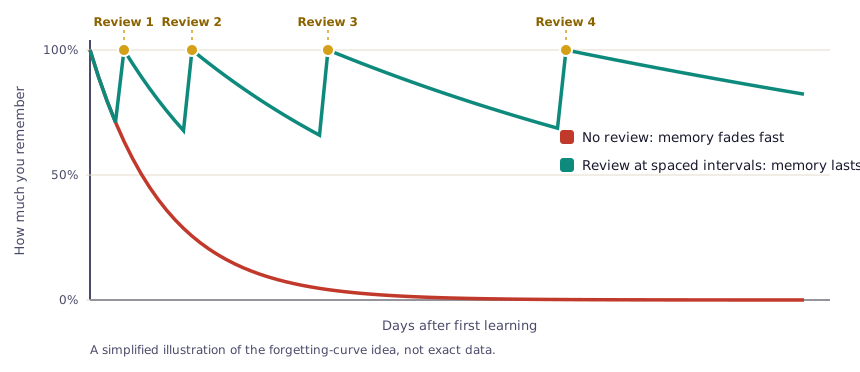
Figure: spaced review keeps memory high; without it, memory fades quickly (simplified).
3. Mix topics instead of blocking them
Studying one chapter for hours feels smooth, but switching between related topics (called interleaving) trains you to choose the right method for each question, which is what an exam asks. In a practice session, mix questions from several chapters.
4. Use short, focused sessions
Many students use sessions of around 25 to 50 minutes of full focus, then a 5 to 10 minute break (the Pomodoro idea). Put the phone in another room. Forty focused minutes beat three distracted hours.
5. Explain it simply
Try to teach the topic to a friend, a younger sibling, or an imaginary student. Where your explanation stumbles is exactly where you do not yet understand. Go back to that part only.
6. Protect your sleep
Sleep is when the brain stores what you studied. Staying up all night before an exam usually costs more than it gains. Most students do better with a regular sleep schedule, some movement and proper meals.
A simple weekly routine
| When | What to do | Why it helps |
|---|---|---|
| Every study day | Learn new material, then close the book and recall it | Active recall |
| Next morning | Quickly review yesterday's notes and questions | First spaced review |
| End of the week | Mixed questions from the whole week | Interleaving and testing |
| Once a month | Timed practice paper, then fix your mistakes | Exam practice and feedback |
Common mistakes
- Highlighting everything. If every line is yellow, nothing stands out.
- Copying notes word for word. Rewrite in your own words, shorter.
- Skipping the hard topics. Start with them while your mind is fresh.
- Never checking your answers. Practice without feedback repeats errors.
Different people need different timings, so treat these numbers as a starting point and adjust to what works for you. On MeroSir you can practise MCQs by topic and revisit the questions you got wrong, which fits spaced review naturally.



Comments
Loading comments…