The marks ゛ and ゜ work the same in katakana. Katakana also has some extra combinations for foreign sounds that hiragana does not have. At the end you will write your own name.
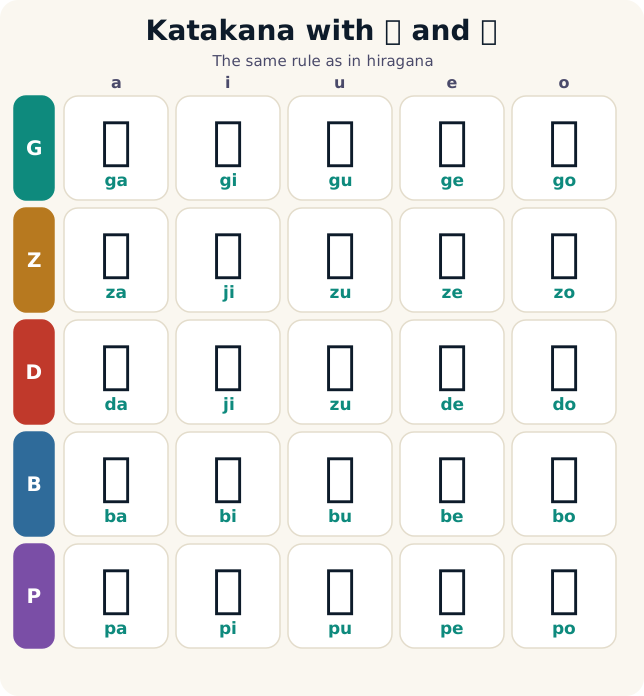
| a | i | u | e | o |
|---|---|---|---|---|
| ガ ga ▶ | ギ gi ▶ | グ gu ▶ | ゲ ge ▶ | ゴ go ▶ |
| ザ za ▶ | ジ ji ▶ | ズ zu ▶ | ゼ ze ▶ | ゾ zo ▶ |
| ダ da ▶ | ヂ ji ▶ | ヅ zu ▶ | デ de ▶ | ド do ▶ |
| バ ba ▶ | ビ bi ▶ | ブ bu ▶ | ベ be ▶ | ボ bo ▶ |
| パ pa ▶ | ピ pi ▶ | プ pu ▶ | ペ pe ▶ | ポ po ▶ |
Contracted sounds in katakana
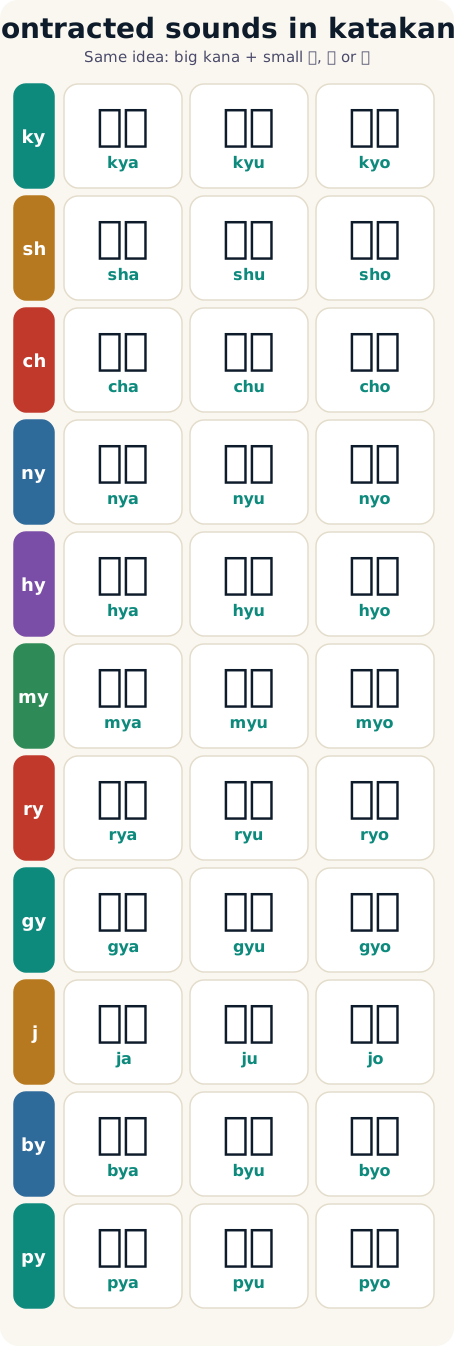
Big kana + small ャ ュ ョ = one beat: シャ (sha), チュ (chu).
Extra sounds for foreign words
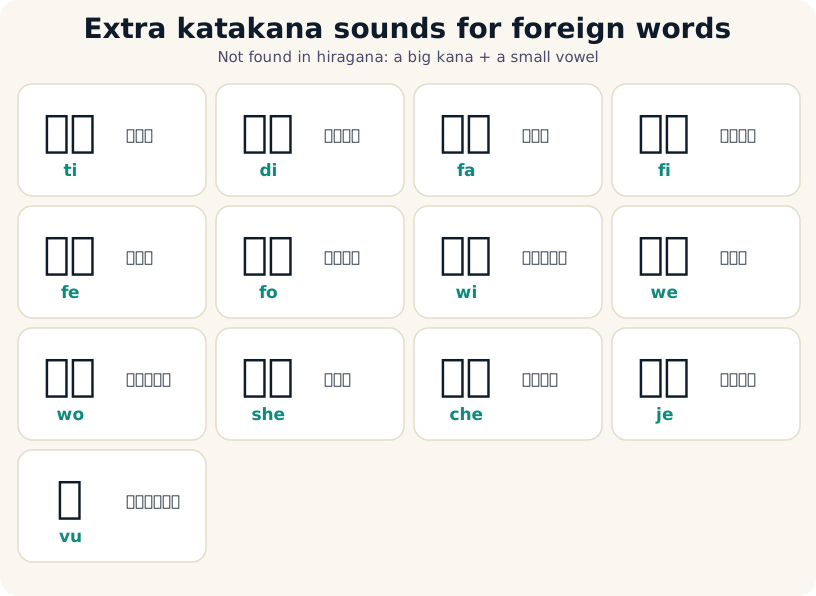
| Katakana | Sound | Example |
|---|---|---|
| ティ ▶ | ti | ティー (tea), パーティー (party) |
| ディ ▶ | di | ディスコ (disco) |
| ファ ▶ | fa | ファン (fan) |
| フィ ▶ | fi | フィルム (film) |
| フェ ▶ | fe | カフェ (café) |
| フォ ▶ | fo | フォーク (fork) |
| ウィ ▶ | wi | ウィンドウ (window) |
| ウェ ▶ | we | ウェブ (web) |
| ウォ ▶ | wo | ウォーター (water) |
| シェ ▶ | she | シェア (share) |
| チェ ▶ | che | チェック (check) |
| ジェ ▶ | je | ジェット (jet) |
| ヴ ▶ | vu | ヴァイオリン (violin) |
Nepal in katakana
| Japanese | Romaji | नेपाली | English | Listen |
|---|---|---|---|---|
| ネパール | nepaaru | नेपाल | Nepal | ▶ |
| カトマンズ | katomanzu | काठमाडौँ | Kathmandu | ▶ |
| ポカラ | pokara | पोखरा | Pokhara | ▶ |
| ルンビニ | runbini | लुम्बिनी | Lumbini | ▶ |
| エベレスト | eberesuto | सगरमाथा (एभरेस्ट) | Mount Everest | ▶ |
| ダルバート | darubaato | दालभात | dal bhat | ▶ |
| モモ | momo | मोमो | momo dumplings | ▶ |
| チャイ | chai | चिया | chai, milk tea | ▶ |
Everyday katakana words
| Japanese | Romaji | नेपाली | English | Listen |
|---|---|---|---|---|
| バス | basu | बस | bus | ▶ |
| ビル | biru | भवन | building | ▶ |
| ドア | doa | ढोका | door | ▶ |
| テレビ | terebi | टेलिभिजन | television | ▶ |
| ゲーム | geemu | खेल / गेम | game | ▶ |
| ジュース | juusu | जुस | juice | ▶ |
| ピザ | piza | पिज्जा | pizza | ▶ |
| パーティー | paatii | पार्टी | party | ▶ |
| コンピューター | konpyuutaa | कम्प्युटर | computer | ▶ |
| スマホ | sumaho | मोबाइल (स्मार्टफोन) | smartphone | ▶ |
| コンビニ | konbini | सुविधा पसल | convenience store | ▶ |
| メニュー | menyuu | मेनु | menu | ▶ |
Write your name in katakana
Foreigners write their names in katakana in Japan. The method: say your name slowly, split it into Japanese beats, then write each beat. Japanese has no ट/ठ/ड/ढ and no aspirated sounds (ख, घ, थ, ध, फ, भ): use the nearest plain sound (ta, da, pa, ba). A consonant standing alone at the end becomes consonant + u (or o after t and d): Ram → ra-mu.
| Katakana | Romaji | Latin | Listen |
|---|---|---|---|
| スニル | suniru | Sunil | ▶ |
| アニル | aniru | Anil | ▶ |
| ラム | ramu | Ram | ▶ |
| ギータ | giita | Gita | ▶ |
| サリタ | sarita | Sarita | ▶ |
| プラカシュ | purakashu | Prakash | ▶ |
| クリシュナ | kurishuna | Krishna | ▶ |
| サンジャイ | sanjai | Sanjay | ▶ |
Your name may have more than one correct spelling. Pick one, and use the same spelling on every form, visa document and resume. Ask a Japanese teacher to check yours.
Every ▶ button plays a clear computer voice, which is good for learning sounds and rhythm but is not a native speaker. Pitch (the rise and fall of the voice) can sound a little flat. Also listen to real Japanese as often as you can: videos, news for learners (NHK Easy), and Japanese people around you.
Check yourself
Try to answer every question before you look at the answers.
- Read: バス.
- Read: ネパール.
- Read: カトマンズ.
- Read: ジュース.
- Read: パーティー.
- Which mark makes バ from ハ, and which makes パ?
- What is the sound of シャ, and how many beats is it?
- Which katakana writes the foreign sound ti, as in パーティー?
- Write Prakash in katakana.
- Why are Nepali ट and त both written with the same katakana sounds (タ, チ…) in Japanese?
Answers
Count your correct answers. If you got fewer than 7 out of 10, read the lesson again and listen to the audio once more.
- basu: bus.
- nepaaru: Nepal.
- katomanzu: Kathmandu.
- juusu: juice.
- paatii: party.
- ゛ makes バ; ゜ makes パ.
- sha, one beat.
- ティ (テ + small ィ).
- プラカシュ.
- Japanese has one t sound, so use the nearest plain sound for both.
Comments
Loading comments…