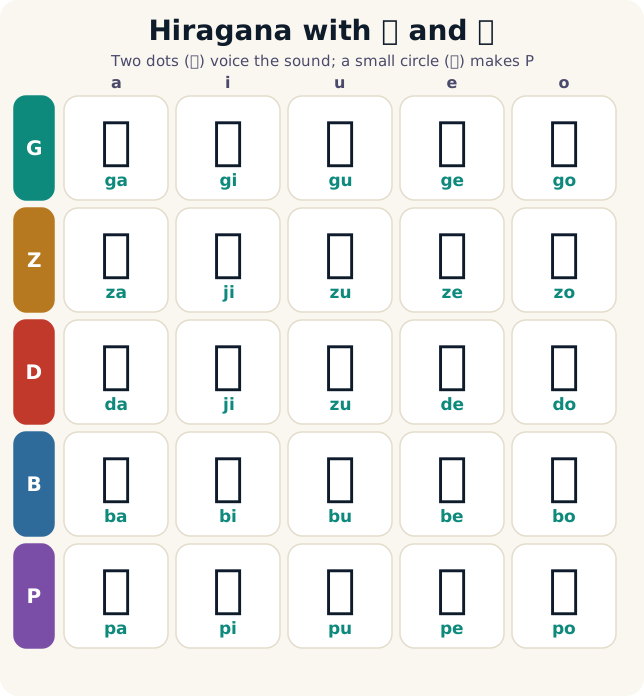
You already know 46 hiragana. Now you can read 25 more sounds without learning any new shapes. Add two small dots (゛ dakuten) or a small circle (゜ handakuten) to a kana you know.
The rule
| Row | Add | Becomes | Example | Listen |
|---|---|---|---|---|
| k (か) | ゛ | g (が) | か → が (ka → ga) | ▶ |
| s (さ) | ゛ | z / j (ざ) | さ → ざ (sa → za) | ▶ |
| t (た) | ゛ | d (だ) | た → だ (ta → da) | ▶ |
| h (は) | ゛ | b (ば) | は → ば (ha → ba) | ▶ |
| h (は) | ゜ | p (ぱ) | は → ぱ (ha → pa) | ▶ |
Nepali has the same idea: voiceless and voiced pairs such as क/ग, च/ज, त/द, प/ब. In Japanese the voiced sound is made by adding the marks, and the throat vibrates.
All the voiced sounds
| a | i | u | e | o |
|---|---|---|---|---|
| が ga ▶ | ぎ gi ▶ | ぐ gu ▶ | げ ge ▶ | ご go ▶ |
| ざ za ▶ | じ ji ▶ | ず zu ▶ | ぜ ze ▶ | ぞ zo ▶ |
| だ da ▶ | ぢ ji ▶ | づ zu ▶ | で de ▶ | ど do ▶ |
| ば ba ▶ | び bi ▶ | ぶ bu ▶ | べ be ▶ | ぼ bo ▶ |
| ぱ pa ▶ | ぴ pi ▶ | ぷ pu ▶ | ぺ pe ▶ | ぽ po ▶ |
Two special pairs
- じ (from し) is ji; ぢ (from ち) is also ji. ず (from す) is zu; づ (from つ) is also zu. Write じ and ず in normal words. ぢ and づ are rare (つづく, to continue).
- だ is da, で is de, ど is do. Japanese has no di or du in the basic kana.
Words you can read now
| Japanese | Romaji | नेपाली | English | Listen |
|---|---|---|---|---|
| ごはん | gohan | भात / खाना | cooked rice, a meal | ▶ |
| かばん | kaban | झोला | bag | ▶ |
| でんわ | denwa | फोन | telephone | ▶ |
| ともだち | tomodachi | साथी | friend | ▶ |
| たべもの | tabemono | खानेकुरा | food | ▶ |
| くだもの | kudamono | फलफूल | fruit | ▶ |
| えんぴつ | enpitsu | पेन्सिल | pencil | ▶ |
| ぱん | pan | पाउरोटी | bread | ▶ |
| ぼうし | boushi | टोपी | hat, cap | ▶ |
| だいがく | daigaku | विश्वविद्यालय | university | ▶ |
| ぎんこう | ginkou | बैंक | bank | ▶ |
| じかん | jikan | समय | time | ▶ |
| さんぽ | sanpo | हिँडाइ / चहलपहल | a walk | ▶ |
Remember: ゛ and ゜ go at the top right of the kana. Only the H row can take ゜. Sounds like pa and ba are different words: ぱん (bread) and ばん (evening, night shift).
Every ▶ button plays a clear computer voice, which is good for learning sounds and rhythm but is not a native speaker. Pitch (the rise and fall of the voice) can sound a little flat. Also listen to real Japanese as often as you can: videos, news for learners (NHK Easy), and Japanese people around you.
Check yourself
Try to answer every question before you look at the answers.
- What does ゛ do to か?
- Which mark turns は into ぱ?
- Read: ごはん.
- Read: でんわ.
- Read: ともだち.
- Read: だいがく.
- Read: ぎんこう.
- Write ba and pa in hiragana.
- Which two hiragana are both read ji? Which one do you normally write?
- Which row can take both ゛ and ゜?
Answers
Count your correct answers. If you got fewer than 7 out of 10, read the lesson again and listen to the audio once more.
- It makes が (ga).
- ゜ (handakuten, the small circle).
- gohan: cooked rice, a meal.
- denwa: telephone.
- tomodachi: friend.
- daigaku: university.
- ginkou: bank.
- ば and ぱ.
- じ and ぢ. You normally write じ.
- The H row (は → ば / ぱ).
Comments
Loading comments…