Time to read. Hiragana is the base of everything. In this lesson you learn the five vowels and the K row: 10 characters, and about 10 new words you can already read.
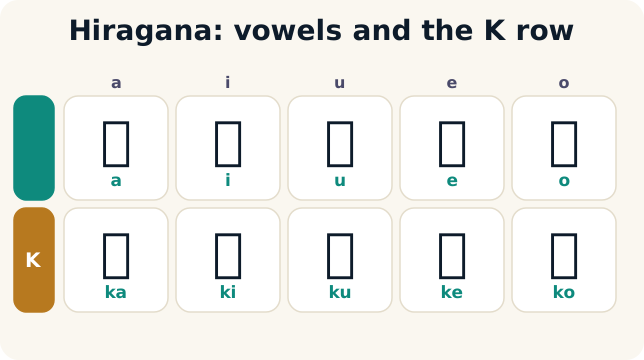
Read left to right: a i u e o, then ka ki ku ke ko.
Listen and repeat
| a | i | u | e | o |
|---|---|---|---|---|
| あ a ▶ | い i ▶ | う u ▶ | え e ▶ | お o ▶ |
| か ka ▶ | き ki ▶ | く ku ▶ | け ke ▶ | こ ko ▶ |
How to write kana: stroke order
Stroke order is not decoration. It makes handwriting faster, neater and balanced, and it is how Japanese people recognise handwritten characters. General rules (with exceptions, so follow the sheet):
- Top to bottom, left to right.
- Horizontal strokes before vertical ones where they cross.
- Outside before inside; close a box last.
- The number on each stroke on the sheet shows when to draw it.
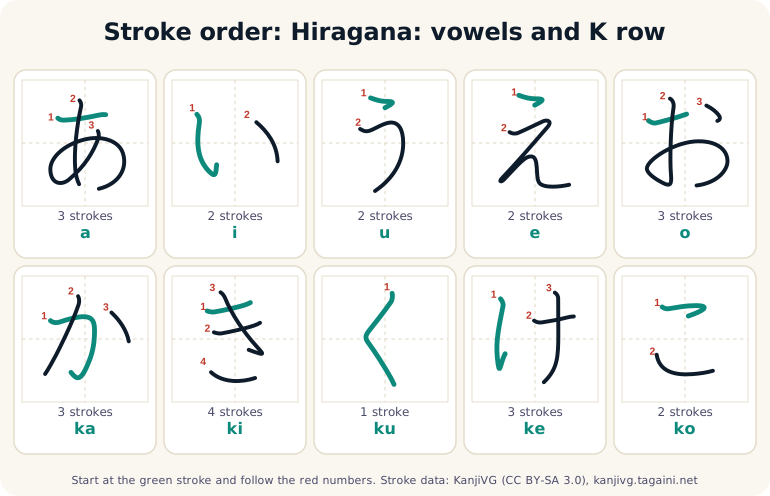
Write each character 5 to 10 times, saying the sound aloud.
Stroke data: KanjiVG, © Ulrich Apel and contributors, CC BY-SA 3.0 (kanjivg.tagaini.net). The sheet images are shared under the same licence.
Look-alikes to watch
- あ and お look similar. あ has a loop on the right and a cross on the left; お has a dot at the top right.
- き has a short crossbar and a hook at the bottom (compare さ in the next lesson).
- く is a simple angle, like a bird's beak.
Your first words
You can already read these. Cover the romaji and try first.
| Japanese | Romaji | नेपाली | English | Listen |
|---|---|---|---|---|
| あい | ai | माया / प्रेम | love | ▶ |
| あお | ao | नीलो | blue | ▶ |
| あか | aka | रातो | red | ▶ |
| いえ | ie | घर | house | ▶ |
| うえ | ue | माथि | above, up | ▶ |
| かお | kao | अनुहार | face | ▶ |
| いけ | ike | पोखरी | pond | ▶ |
| こえ | koe | आवाज (मानिसको) | voice | ▶ |
| くうき | kuuki | हावा | air | ▶ |
| あき | aki | शरद ऋतु | autumn | ▶ |
How to practise
- Look at the chart and say each sound aloud, then press ▶ to compare.
- Write each character on paper following the stroke sheet, saying the sound.
- Cover the romaji and read the words above.
- Tomorrow, close the page and write the 10 characters from memory.
Every ▶ button plays a clear computer voice, which is good for learning sounds and rhythm but is not a native speaker. Pitch (the rise and fall of the voice) can sound a little flat. Also listen to real Japanese as often as you can: videos, news for learners (NHK Easy), and Japanese people around you.
Check yourself
Try to answer every question before you look at the answers.
- Read: あい.
- Read: かお.
- Read: いけ.
- Read: こえ.
- Read: くうき.
- Write あか in kana: it means red.
- Write the hiragana for the sound ku.
- Which two vowels look similar and are easy to confuse?
- How many beats does くうき have?
- The K row in order is か, き, く, け, こ. What are their sounds?
Answers
Count your correct answers. If you got fewer than 7 out of 10, read the lesson again and listen to the audio once more.
- ai: love.
- kao: face.
- ike: pond.
- koe: voice.
- kuuki: air.
- あか.
- く.
- あ (a) and お (o).
- Three: ku-u-ki.
- ka, ki, ku, ke, ko.
Comments
Loading comments…