Good news: Japanese has only five vowels and a small number of consonants, and most of them are in Nepali too. The hard part is not the sounds but the rhythm: Japanese gives every beat the same length. This lesson trains your ear before you learn to read.
The five vowels
Each vowel is short, clear and always pronounced the same way (unlike English). Nepali speakers have a head start.
| Kana | Romaji | Close to Nepali | Example | Listen |
|---|---|---|---|---|
| あ | a | आ, but short | あさ (asa) morning, बिहान | ▶ |
| い | i | इ | いえ (ie) house, घर | ▶ |
| う | u | उ, with the lips relaxed, not rounded | うみ (umi) sea, समुद्र | ▶ |
| え | e | ए, short | えき (eki) station, स्टेसन | ▶ |
| お | o | ओ, short | おちゃ (ocha) tea, चिया | ▶ |
Say the five in a row, evenly: a, i, u, e, o ▶
Consonants: mostly familiar
The consonants k, s, t, n, h, m, y, r, w behave as you expect. Watch these:
- r (ら, り, る, れ, ろ): a light tap of the tongue, very close to the Nepali र. It is not the English r and not quite an l.
- shi (し) is like शि, chi (ち) is like चि, ji (じ) is like जि.
- tsu (つ): the sound t and s together, as at the end of the English word cats.
- fu (ふ): a soft breath made with both lips, between fu and hu. It is not a strong फ.
- g (が, ぎ, ぐ…) is always a hard g, as in go, never like giant.
| Japanese | Romaji | नेपाली | English | Listen |
|---|---|---|---|---|
| さくら | sakura | चेरी फूल | cherry blossom | ▶ |
| ふね | fune | डुङ्गा / जहाज | boat, ship | ▶ |
| つき | tsuki | चन्द्रमा / महिना | moon, month | ▶ |
| りんご | ringo | स्याउ | apple | ▶ |
| しお | shio | नुन | salt | ▶ |
| ちち | chichi | बुबा (आफ्नो) | my father | ▶ |
The beat (mora): the heart of Japanese rhythm
Japanese is counted in beats (linguists call them mora). Every beat takes about the same time. Clap or tap as you say a word:
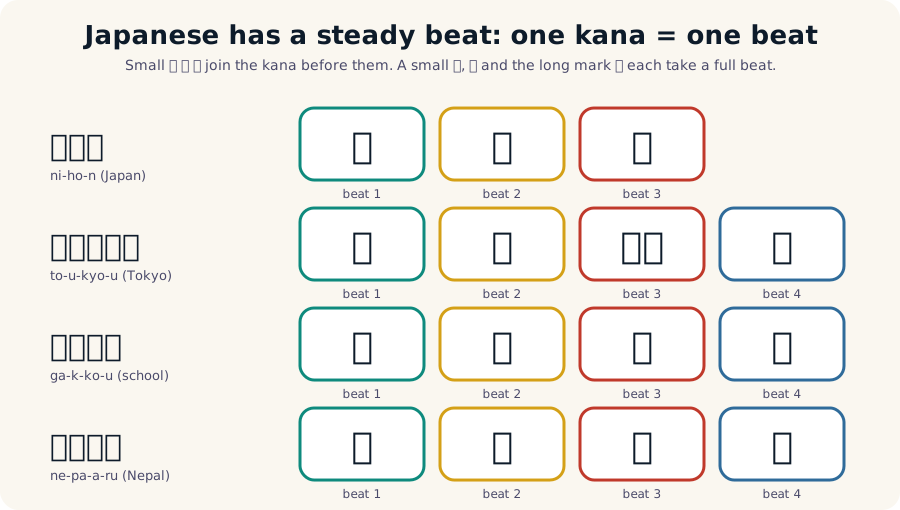
か, き, く = 1 beat each. A big kana with a small ゃ, ゅ or ょ is still 1 beat. っ, ん and the second half of a long vowel are 1 beat each.
| Japanese | Romaji | नेपाली | English | Listen |
|---|---|---|---|---|
| さくら | sa-ku-ra | चेरी फूल | 3 beats | ▶ |
| にほん | ni-ho-n | जापान | 3 beats (ん counts as one) | ▶ |
| がっこう | ga-k-ko-u | विद्यालय | 4 beats (っ is a beat of silence, う lengthens the o) | ▶ |
| きょう | kyo-u | आज | 2 beats (きょ is one beat) | ▶ |
| とうきょう | to-u-kyo-u | टोकियो | 4 beats | ▶ |
Long vowels: hold for two beats
A long vowel is held for two beats. The length changes the word completely, so listen for it:
| Short | Long | Listen |
|---|---|---|
| おばさん (obasan): aunt, काकी/फुपू | おばあさん (obaasan): grandmother, हजुरआमा | ▶ ▶ |
| おじさん (ojisan): uncle, काका/मामा | おじいさん (ojiisan): grandfather, हजुरबुबा | ▶ ▶ |
| ゆき (yuki): snow, हिउँ | ゆうき (yuuki): courage, साहस | ▶ ▶ |
| ビル (biru): building, भवन | ビール (biiru): beer, बियर | ▶ ▶ |
Romaji in this course doubles the vowel (aa, ii, uu, ee, oo) to show a long vowel. Nepali has long and short vowels too (इ/ई, उ/ऊ), so you already know the idea.
The small っ: a short stop
A small っ is a silent beat that doubles the next consonant: k-ka, t-ta, p-pa. Close your mouth for one beat, then release. Compare:
| Without っ | With っ | Listen |
|---|---|---|
| きて (kite): come!, आऊ | きって (kitte): postage stamp, टिकट | ▶ ▶ |
| おと (oto): sound, आवाज | おっと (otto): husband (my own), श्रीमान् | ▶ ▶ |
The ん: a full-beat nasal
ん is one whole beat, a nasal sound like the Nepali ं or ङ. It changes a little with the next sound (n before t, m before p, b), but you do not need to think about it: just give it a full beat. Listen: にほん (ni-ho-n) ▶, みんな (mi-n-na, everyone, सबै) ▶.
Pitch accent: a gentle tune, not stress
English stresses a syllable by making it louder. Japanese does not. Instead each word has a pattern of high and low pitch. For example, in standard Tokyo speech hashi is high-low for chopsticks (箸) and low-high for bridge (橋). Beginners should not worry: keep every beat even, avoid stressing any one syllable, and copy the speakers you hear. Computer voices do not reproduce pitch perfectly, so listen to real speakers too.
Sounds that sometimes disappear
In です and ます the final u is often barely voiced, so you hear something like des and mas. You will hear this in real life. It is fine to say the full vowel when you are learning.
Every ▶ button plays a clear computer voice, which is good for learning sounds and rhythm but is not a native speaker. Pitch (the rise and fall of the voice) can sound a little flat. Also listen to real Japanese as often as you can: videos, news for learners (NHK Easy), and Japanese people around you.
Check yourself
Try to answer every question before you look at the answers.
- How many vowels does Japanese have?
- Which Nepali consonant is closest to the Japanese r?
- How many beats does にほん have?
- How many beats does きょう have?
- What is the difference in meaning between おばさん and おばあさん?
- What does a small っ do?
- How long is the sound ん?
- How is long vowel length shown in this course's romaji?
- Is Japanese stressed like English, or does it use pitch?
- How many beats does がっこう have, and which one is silent?
Answers
Count your correct answers. If you got fewer than 7 out of 10, read the lesson again and listen to the audio once more.
- Five: a, i, u, e, o.
- र (a light tap of the tongue).
- Three: ni-ho-n.
- Two: kyo-u (きょ is one beat).
- おばさん is aunt; おばあさん is grandmother. The long あ makes the difference.
- It makes a silent beat that doubles the next consonant (きて → きって).
- One full beat.
- By doubling the vowel (aa, ii, uu, ee, oo).
- It uses pitch accent (high and low pitch), not loud stress.
- Four: ga-k-ko-u. The small っ is the silent beat.
Comments
Loading comments…