Katakana represents exactly the same sounds as hiragana, so you already know how to say every character. Only the shapes are new: straight, angular and sharp. It is used for:
- foreign words (コーヒー, coffee; テスト, test)
- foreign names and places (ネパール, Nepal)
- sound effects and emphasis, like italics in English
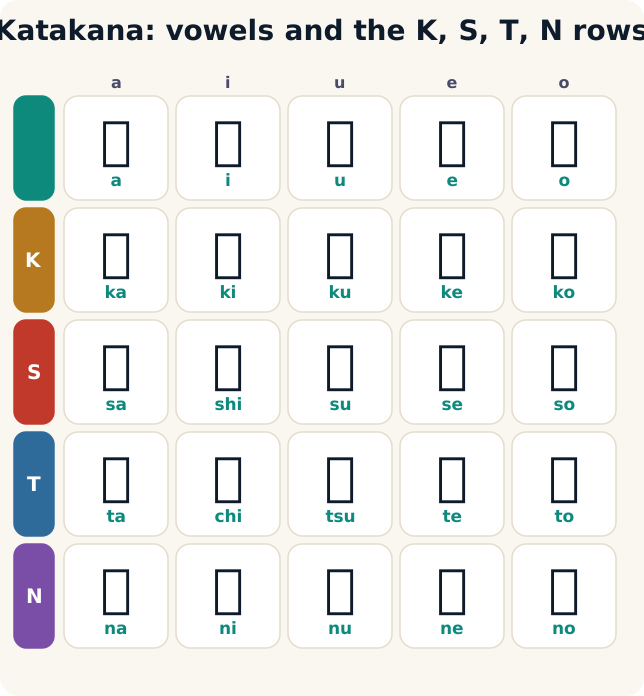
The same sounds as hiragana (Lessons 3 to 5), in angular shapes.
Listen and repeat
| a | i | u | e | o |
|---|---|---|---|---|
| ア a ▶ | イ i ▶ | ウ u ▶ | エ e ▶ | オ o ▶ |
| カ ka ▶ | キ ki ▶ | ク ku ▶ | ケ ke ▶ | コ ko ▶ |
| サ sa ▶ | シ shi ▶ | ス su ▶ | セ se ▶ | ソ so ▶ |
| タ ta ▶ | チ chi ▶ | ツ tsu ▶ | テ te ▶ | ト to ▶ |
| ナ na ▶ | ニ ni ▶ | ヌ nu ▶ | ネ ne ▶ | ノ no ▶ |
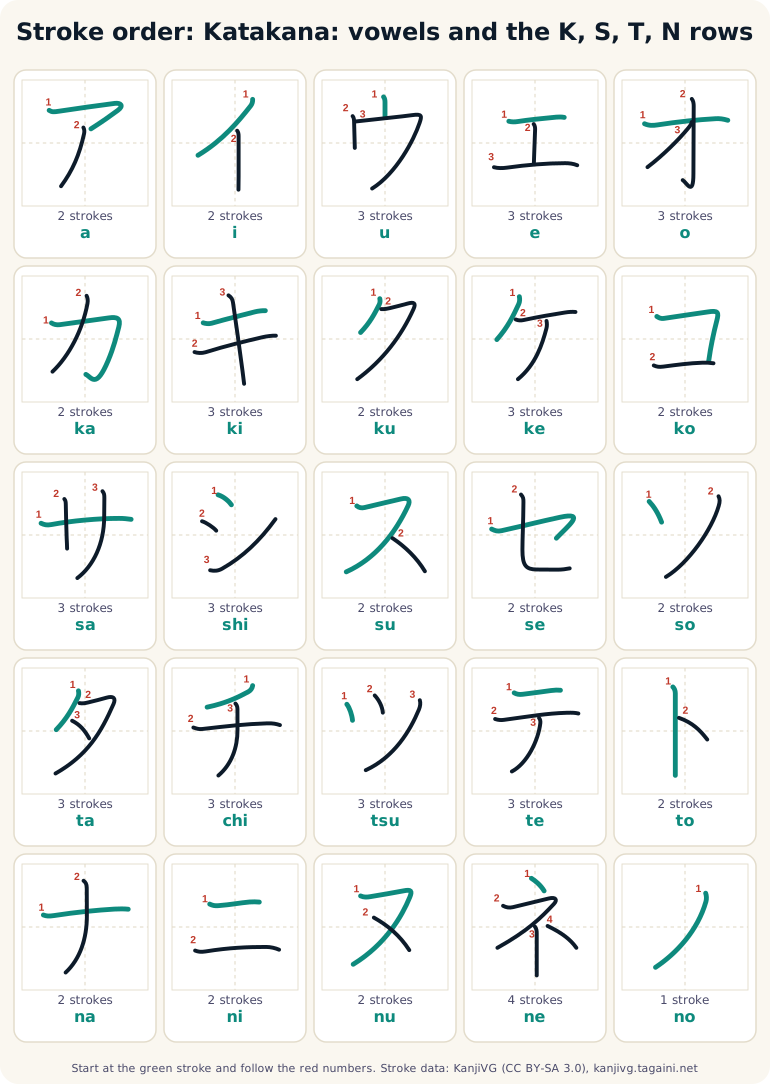
Follow the numbers.
Stroke data: KanjiVG, © Ulrich Apel and contributors, CC BY-SA 3.0 (kanjivg.tagaini.net). The sheet images are shared under the same licence.
The long-vowel mark ー
In katakana a long vowel is written with a dash ー: ケーキ (keeki), タクシー (takushii). In horizontal writing it is a horizontal line. Hold the previous vowel for two beats. (Hiragana does not use ー for this.) The small ッ works like っ: サッカー (sakkaa).
Look-alikes: the famous pairs
- シ (shi) / ツ (tsu): シ has its strokes lying more horizontally and sweeping up, like a smile. ツ has its strokes more vertical, pointing down.
- ソ (so) / ン (n): ソ is steeper, ン is flatter. (ン comes in Lesson 10.)
- ク (ku) / ケ (ke) / タ (ta): look at the number of strokes and where they cross.
- ウ (u) / ワ (wa) and ナ (na) / メ (me): small differences. Use the stroke sheet.
Words you can read now
| Japanese | Romaji | नेपाली | English | Listen |
|---|---|---|---|---|
| テスト | tesuto | परीक्षा | test | ▶ |
| ケーキ | keeki | केक | cake | ▶ |
| タクシー | takushii | ट्याक्सी | taxi | ▶ |
| ノート | nooto | कापी | notebook | ▶ |
| テニス | tenisu | टेनिस | tennis | ▶ |
| サッカー | sakkaa | फुटबल | soccer, football | ▶ |
| アイス | aisu | आइसक्रिम / बरफ | ice, ice cream | ▶ |
| チケット | chiketto | टिकट | ticket | ▶ |
| セーター | seetaa | स्वेटर | sweater | ▶ |
| スイス | suisu | स्विजरल्यान्ड | Switzerland | ▶ |
| ケニア | kenia | केन्या | Kenya | ▶ |
Tip: say the word in English first (test, cake, taxi), then read the katakana. Loanwords are changed to fit Japanese sounds and beats, so ケーキ is keeki, not cake.
Every ▶ button plays a clear computer voice, which is good for learning sounds and rhythm but is not a native speaker. Pitch (the rise and fall of the voice) can sound a little flat. Also listen to real Japanese as often as you can: videos, news for learners (NHK Easy), and Japanese people around you.
Check yourself
Try to answer every question before you look at the answers.
- Read: テスト.
- Read: ケーキ.
- Read: タクシー.
- Read: ノート.
- Read: サッカー.
- What does the dash ー do in katakana?
- Write ka in katakana.
- Write shi and tsu in katakana and say how to tell them apart.
- Is the sound of カ different from か?
- When do we use katakana instead of hiragana?
Answers
Count your correct answers. If you got fewer than 7 out of 10, read the lesson again and listen to the audio once more.
- tesuto: test.
- keeki: cake.
- takushii: taxi.
- nooto: notebook.
- sakkaa: soccer.
- It lengthens the previous vowel (two beats).
- カ.
- シ and ツ. シ has horizontal-leaning strokes that sweep up; ツ has more vertical strokes.
- No. The sound is the same; only the shape differs.
- For foreign words and names, and for emphasis.
Comments
Loading comments…