Kanji came from China. Each character has a meaning and usually more than one reading. Do not be scared: this lesson uses the simplest, most common kanji. All except 万 are among the kanji taught in the first year of Japanese primary school.
Two kinds of reading
- On-yomi (音読み): the Chinese-derived reading, used in compound words of two or more kanji (日本 ni-hon).
- Kun-yomi (訓読み): the native Japanese reading, used when the kanji stands alone or with hiragana (人 hito).
- Learn kanji inside words, not alone. The word shows you which reading is used.
Numbers
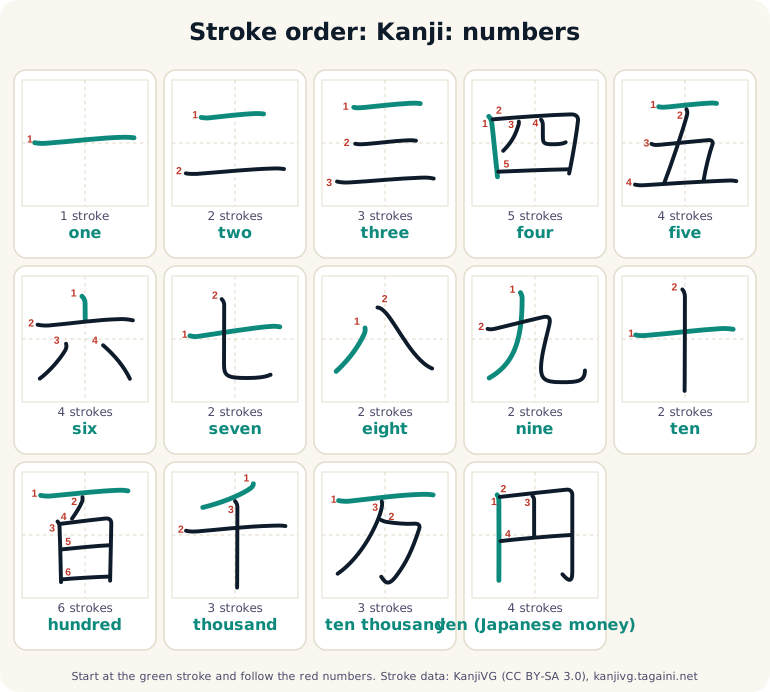
Follow the numbers for each stroke.
Stroke data: KanjiVG, © Ulrich Apel and contributors, CC BY-SA 3.0 (kanjivg.tagaini.net). The sheet images are shared under the same licence.
| Kanji | Romaji | नेपाली | Meaning (reading) | Listen |
|---|---|---|---|---|
| 一 | ichi | एक | one (いち) | ▶ |
| 二 | ni | दुई | two (に) | ▶ |
| 三 | san | तीन | three (さん) | ▶ |
| 四 | yon / shi | चार | four (よん) | ▶ |
| 五 | go | पाँच | five (ご) | ▶ |
| 六 | roku | छ | six (ろく) | ▶ |
| 七 | nana / shichi | सात | seven (なな) | ▶ |
| 八 | hachi | आठ | eight (はち) | ▶ |
| 九 | kyuu / ku | नौ | nine (きゅう) | ▶ |
| 十 | juu | दश | ten (じゅう) | ▶ |
| 百 | hyaku | सय | hundred (ひゃく) | ▶ |
| 千 | sen | हजार | thousand (せん) | ▶ |
| 万 | man | दश हजार | ten thousand (まん) | ▶ |
| 円 | en | जापानी मुद्रा (येन) | yen, a circle (えん) | ▶ |
Number kanji combine like the spoken numbers: 十一 = 11, 二十 = 20, 二十三 = 23, 三百 = 300, 千円 = 1,000 yen.
| Kanji | Romaji | नेपाली | English | Listen |
|---|---|---|---|---|
| 十一 | juuichi | एघार | 11 | ▶ |
| 二十 | nijuu | बीस | 20 | ▶ |
| 百円 | hyaku en | सय येन | 100 yen | ▶ |
| 千円 | sen en | हजार येन | 1,000 yen | ▶ |
| 一万円 | ichiman en | दश हजार येन | 10,000 yen | ▶ |
Days of the week and 人
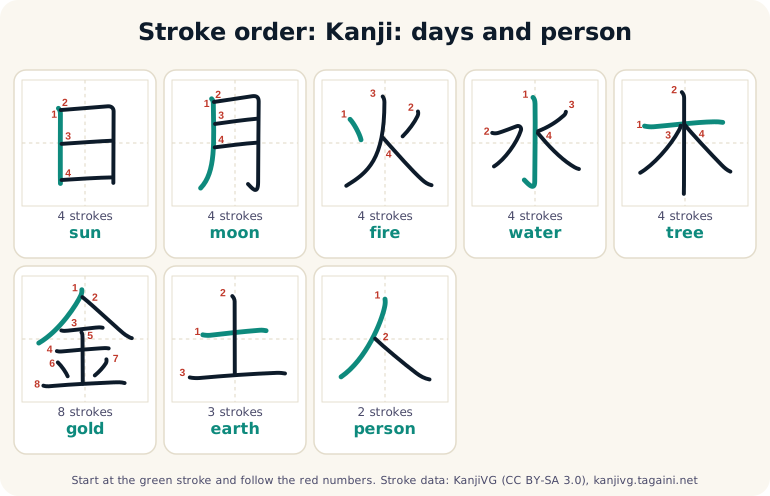
Most of these began as pictures: 日 sun, 月 moon, 火 flame, 水 water, 木 tree, 土 earth.
Stroke data: KanjiVG, © Ulrich Apel and contributors, CC BY-SA 3.0 (kanjivg.tagaini.net). The sheet images are shared under the same licence.
The seven days are named after the sun, the moon and five elements (fire, water, wood, metal, earth). Every day ends in 曜日 (youbi, day of the week), a kanji group you will learn later.
| Kanji | Romaji | नेपाली | Meaning | Listen |
|---|---|---|---|---|
| 日 | nichi / hi | दिन / सूर्य | sun, day | ▶ |
| 月 | getsu / tsuki | चन्द्रमा / महिना | moon, month | ▶ |
| 火 | ka / hi | आगो | fire | ▶ |
| 水 | sui / mizu | पानी | water | ▶ |
| 木 | moku / ki | रुख | tree, wood | ▶ |
| 金 | kin / kane | सुन / पैसा | gold, metal, money | ▶ |
| 土 | do / tsuchi | माटो | earth, soil | ▶ |
| 人 | jin, nin / hito | मान्छे | person | ▶ |
| Kanji | Romaji | नेपाली | English | Listen |
|---|---|---|---|---|
| 日曜日 | nichiyoubi | आइतबार | Sunday | ▶ |
| 月曜日 | getsuyoubi | सोमबार | Monday | ▶ |
| 火曜日 | kayoubi | मङ्गलबार | Tuesday | ▶ |
| 水曜日 | suiyoubi | बुधबार | Wednesday | ▶ |
| 木曜日 | mokuyoubi | बिहीबार | Thursday | ▶ |
| 金曜日 | kinyoubi | शुक्रबार | Friday | ▶ |
| 土曜日 | doyoubi | शनिबार | Saturday | ▶ |
Nepali day names also come from the sun, the moon and the planets: आइतबार (sun), सोमबार (moon), मङ्गलबार (Mars). Japanese Sunday and Monday also mean sun-day and moon-day, so the idea will feel familiar.
Words with 人 and 日
| Kanji | Romaji | नेपाली | English | Listen |
|---|---|---|---|---|
| 日本 | nihon | जापान | Japan (the origin of the sun) | ▶ |
| 日本人 | nihonjin | जापानी (मान्छे) | a Japanese person | ▶ |
| 一人 | hitori | एक जना | one person | ▶ |
| 二人 | futari | दुई जना | two people | ▶ |
| 三人 | sannin | तीन जना | three people | ▶ |
| 四人 | yonin | चार जना | four people | ▶ |
Counting people is the first place where a reading is irregular: ひとり (1), ふたり (2), then 〜にん for 3 and more (さんにん, よにん, ごにん).
How to study kanji
- Learn kanji in words, not alone.
- Write each kanji 5 to 10 times in the right stroke order, and say the word aloud.
- Review with flash cards: kanji on one side, reading and meaning on the other.
- Aim for 3 to 5 new kanji a day: you can finish this lesson's 22 in about a week.
A note on how many kanji you need. The Japan Foundation does not publish an official kanji list for the JLPT, so the number needed at each level is only an estimate (often given as around a hundred for N5). Whenever a new kanji appears in this course it comes with its reading.
Every ▶ button plays a clear computer voice, which is good for learning sounds and rhythm but is not a native speaker. Pitch (the rise and fall of the voice) can sound a little flat. Also listen to real Japanese as often as you can: videos, news for learners (NHK Easy), and Japanese people around you.
Check yourself
Try to answer every question before you look at the answers.
- What is the difference between on-yomi and kun-yomi?
- Read: 三.
- Read: 百円.
- Read: 二十.
- What does 木 mean, and what picture is behind it?
- Read: 日本人.
- What day is 金曜日?
- What day is 月曜日?
- How do you say two people?
- Write the kanji for 10,000 and give its reading.
Answers
Count your correct answers. If you got fewer than 7 out of 10, read the lesson again and listen to the audio once more.
- On-yomi is the Chinese-derived reading used in compounds; kun-yomi is the native Japanese reading used when a kanji stands alone or with hiragana.
- san: three.
- hyaku en: 100 yen.
- nijuu: 20.
- Tree or wood. It is a drawing of a tree.
- nihonjin: a Japanese person.
- Friday (kinyoubi).
- Monday (getsuyoubi).
- ふたり (futari).
- 万 (まん, man).
Comments
Loading comments…