Three finishing touches complete hiragana: contracted sounds (a big kana + small や ゆ よ), the small っ, and long vowels. With these you can read almost any word written in hiragana.
1. Contracted sounds (yoon): one beat
Write a kana from the I-column (き, し, ち, に, ひ, み, り, ぎ, じ, び, ぴ) followed by a small ゃ, ゅ or ょ. The two are said together as one beat: き + ゃ = kya.
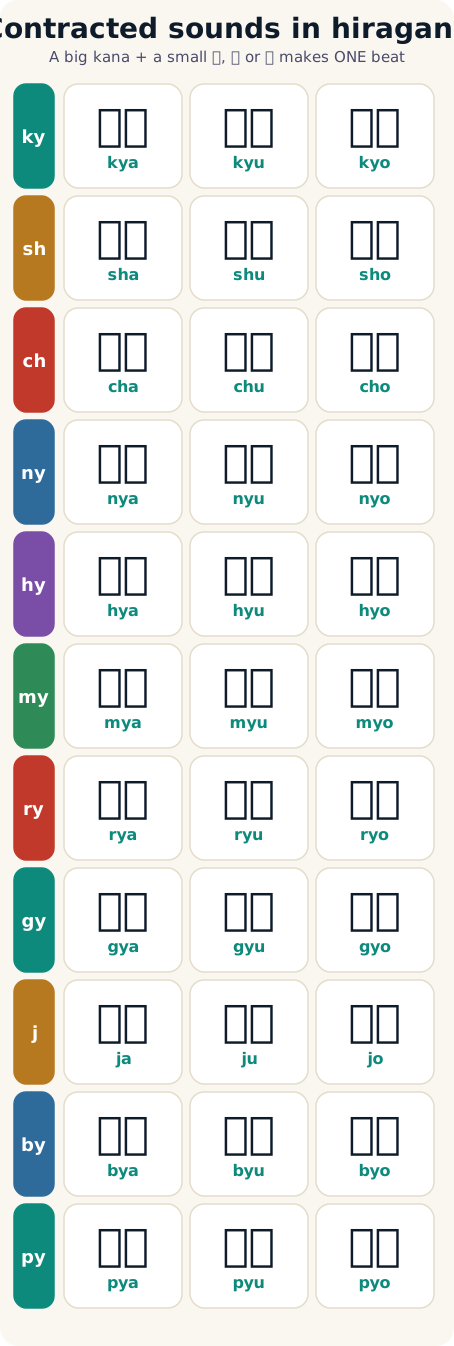
き + ゃ = きゃ (kya). The second kana is smaller and sits lower.
| Japanese | Romaji | नेपाली | English | Listen |
|---|---|---|---|---|
| きゃ・きゅ・きょ | kya kyu kyo | क्य… | contracted K sounds | ▶ |
| しゃ・しゅ・しょ | sha shu sho | श… | contracted SH sounds | ▶ |
| ちゃ・ちゅ・ちょ | cha chu cho | च… | contracted CH sounds | ▶ |
| じゃ・じゅ・じょ | ja ju jo | ज… | contracted J sounds | ▶ |
| りゃ・りゅ・りょ | rya ryu ryo | र्य… | contracted R sounds | ▶ |
Do not confuse these with a full-size kana: きや (ki-ya, two beats) is not きゃ (kya, one beat). Compare びよういん (bi-yo-u-i-n, hairdresser, नाईको पसल) with びょういん (byo-u-i-n, hospital, अस्पताल).
2. The small っ: double the next consonant
| Japanese | Romaji | नेपाली | English | Listen |
|---|---|---|---|---|
| がっこう | gakkou | विद्यालय | school | ▶ |
| きっぷ | kippu | टिकट | ticket | ▶ |
| ざっし | zasshi | पत्रिका | magazine | ▶ |
| ちょっと | chotto | अलिकति | a little | ▶ |
| ずっと | zutto | सधैँ / निकै समयदेखि | all the time, for a long time | ▶ |
Rule: っ is not written before a, i, u, e, o or n. It appears only before k, s, sh, t, ch, p. In romaji you double the next consonant (gakkou, kippu, zasshi, chotto).
3. Long vowels: how they are written in hiragana
| Long sound | Written as | Example | Listen |
|---|---|---|---|
| aa | あ-column + あ | おかあさん (okaasan), mother, आमा | ▶ |
| ii | い-column + い | おにいさん (oniisan), older brother, दाजु | ▶ |
| uu | う-column + う | ゆうめい (yuumei), famous, प्रसिद्ध | ▶ |
| ee | え-column + い (usually) | せんせい (sensee), teacher, शिक्षक | ▶ |
| oo | お-column + う (usually) | とうきょう (tookyoo), Tokyo, टोकियो | ▶ |
Remember: long ee and long oo are normally spelled with い and う. These are pronounced ee and oo, not as separate sounds. A few words use お or え instead, and you must learn them as exceptions:
| Japanese | Romaji | नेपाली | English | Listen |
|---|---|---|---|---|
| おおきい | ookii | ठूलो | big | ▶ |
| とおい | tooi | टाढा | far | ▶ |
| おおい | ooi | धेरै | many, a lot | ▶ |
| おねえさん | oneesan | दिदी | older sister | ▶ |
| ちいさい | chiisai | सानो | small | ▶ |
Mixed practice
| Japanese | Romaji | नेपाली | English | Listen |
|---|---|---|---|---|
| きょう | kyou | आज | today | ▶ |
| しゃしん | shashin | फोटो | photograph | ▶ |
| ちゅうごく | chuugoku | चीन | China | ▶ |
| りょこう | ryokou | यात्रा | trip, travel | ▶ |
| ひゃく | hyaku | सय | one hundred | ▶ |
| おちゃ | ocha | चिया | tea | ▶ |
| じゅうしょ | juusho | ठेगाना | address | ▶ |
| しゅくだい | shukudai | गृहकार्य | homework | ▶ |
Every ▶ button plays a clear computer voice, which is good for learning sounds and rhythm but is not a native speaker. Pitch (the rise and fall of the voice) can sound a little flat. Also listen to real Japanese as often as you can: videos, news for learners (NHK Easy), and Japanese people around you.
Check yourself
Try to answer every question before you look at the answers.
- How many beats does きょう have?
- How many beats does きゃ have?
- Read: がっこう.
- Read: ちょっと.
- Read: おかあさん.
- How do you write the long sound ee in hiragana (as in せんせい)?
- What is the difference between きや and きゃ?
- Read: しゅくだい.
- Name two words where long oo is written with お.
- Before which letters does the small っ appear?
Answers
Count your correct answers. If you got fewer than 7 out of 10, read the lesson again and listen to the audio once more.
- Two: kyo-u.
- One.
- gakkou: school.
- chotto: a little.
- okaasan: mother.
- With い after an え-column kana (せい).
- きや is two beats (ki-ya); きゃ is one beat (kya).
- shukudai: homework.
- おおきい (big) and とおい (far); also おおい (many).
- Before k, s, sh, t, ch and p sounds (never before vowels or n).
Comments
Loading comments…