The last 21 basic hiragana. After this lesson you can read and write all 46. Three of them have two jobs: は, へ and を are also particles, which you will use in Lesson 8.
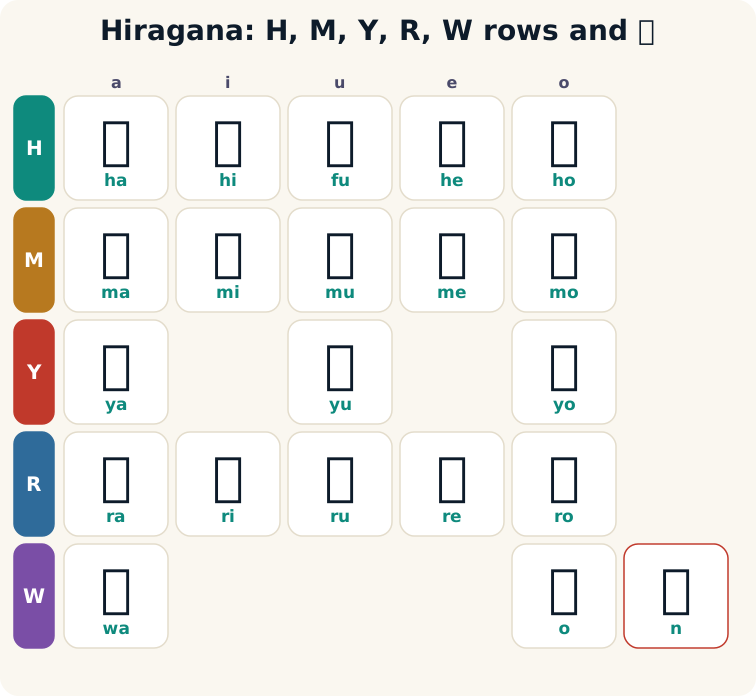
Note: the Y row has only 3 characters and the W row only わ, を and ん.
Listen and repeat
| a | i | u | e | o |
|---|---|---|---|---|
| は ha ▶ | ひ hi ▶ | ふ fu ▶ | へ he ▶ | ほ ho ▶ |
| ま ma ▶ | み mi ▶ | む mu ▶ | め me ▶ | も mo ▶ |
| や ya ▶ | ゆ yu ▶ | よ yo ▶ | ||
| ら ra ▶ | り ri ▶ | る ru ▶ | れ re ▶ | ろ ro ▶ |
| わ wa ▶ | を o ▶ |
And the lone nasal sound: ん n ▶
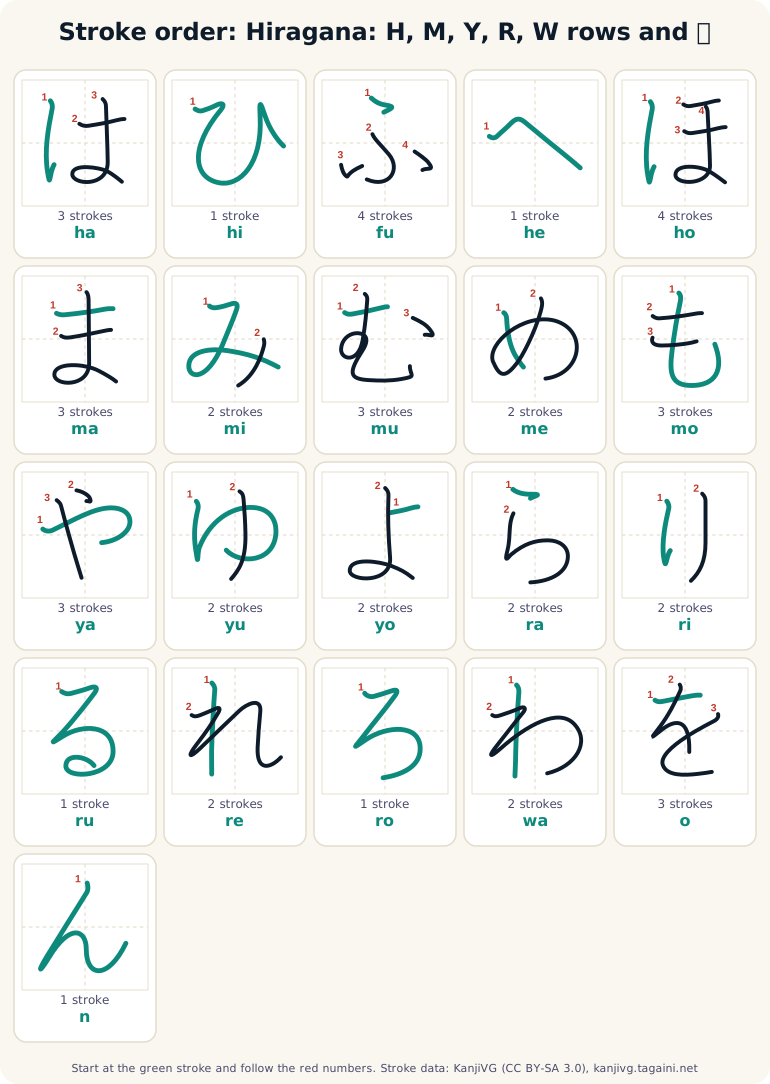
ら is written with two strokes; り is two strokes. Check the numbers.
Stroke data: KanjiVG, © Ulrich Apel and contributors, CC BY-SA 3.0 (kanjivg.tagaini.net). The sheet images are shared under the same licence.
Things to know
- ふ is fu, a soft breath (not a strong फ).
- ら り る れ ろ use the light tap, like the Nepali र.
- を is read o, the same sound as お. It is used only as the object particle, never inside a word.
- ん is a full beat and never starts a word.
- There is no yi, ye, wu in the basic table: the Y row has ya, yu, yo only.
Look-alikes to watch
- ぬ / め: ぬ has a loop at the end of its curve; め ends with a plain curve.
- ね / れ / わ: ね has a loop at the end, れ ends with an open curve, わ ends with a closed curve.
- る / ろ: る has a loop at the bottom, ろ is open.
- は / ほ: ほ has an extra horizontal stroke.
- ま / も and い / り: take care with the bottom and the height of the strokes.
Words you can read now
| Japanese | Romaji | नेपाली | English | Listen |
|---|---|---|---|---|
| はな | hana | फूल | flower | ▶ |
| ひと | hito | मान्छे | person | ▶ |
| ふね | fune | डुङ्गा / जहाज | boat | ▶ |
| へや | heya | कोठा | room | ▶ |
| ほし | hoshi | तारा | star | ▶ |
| まど | mado | झ्याल | window | ▶ |
| みみ | mimi | कान | ear | ▶ |
| やま | yama | पहाड | mountain | ▶ |
| ゆめ | yume | सपना | dream | ▶ |
| よる | yoru | रात | night | ▶ |
| わたし | watashi | म | I, me | ▶ |
| ほん | hon | किताब | book | ▶ |
| にほん | nihon | जापान | Japan | ▶ |
| ひる | hiru | दिउँसो | daytime, noon | ▶ |
A short phrase you can read: やまの ほし ▶ (yama no hoshi: नेपाली: पहाडका तारा. English: stars of the mountain). The small word の (no) works like को / का in Nepali.
Every ▶ button plays a clear computer voice, which is good for learning sounds and rhythm but is not a native speaker. Pitch (the rise and fall of the voice) can sound a little flat. Also listen to real Japanese as often as you can: videos, news for learners (NHK Easy), and Japanese people around you.
Check yourself
Try to answer every question before you look at the answers.
- Read: やま.
- Read: にほん.
- Read: わたし.
- Read: ゆめ.
- Read: ひと.
- Write the hiragana for the sound ra.
- Write the hiragana for the sound n (the lone nasal).
- How is を read, and where is it used?
- Which character is read fu?
- Which pair of characters differ only by an extra horizontal stroke: は and ___?
Answers
Count your correct answers. If you got fewer than 7 out of 10, read the lesson again and listen to the audio once more.
- yama: mountain.
- nihon: Japan.
- watashi: I, me.
- yume: dream.
- hito: person.
- ら.
- ん.
- As o. It is used only as the object particle.
- ふ.
- ほ (ho).
Comments
Loading comments…