Numbers are the first practical skill: shops, phones, ages, times and money. Japanese numbers are very regular once you know 1 to 10. Hiragana readings are shown first; in Lesson 14 you also learn the kanji.
0 to 10
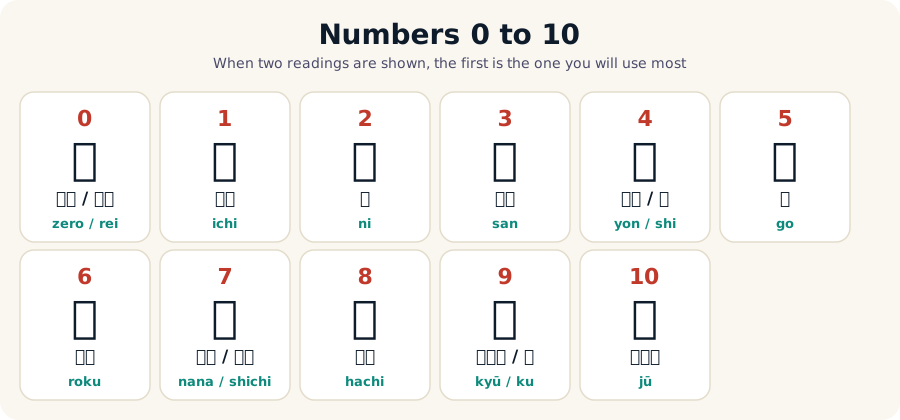
4, 7 and 9 have two readings. Use よん, なな and きゅう in most cases.
| Japanese | Romaji | नेपाली | English | Listen |
|---|---|---|---|---|
| ゼロ / れい | zero / rei | शून्य | 0 | ▶ |
| いち | ichi | एक | 1 | ▶ |
| に | ni | दुई | 2 | ▶ |
| さん | san | तीन | 3 | ▶ |
| よん / し | yon / shi | चार | 4 (よん is the usual one) | ▶ |
| ご | go | पाँच | 5 | ▶ |
| ろく | roku | छ | 6 | ▶ |
| なな / しち | nana / shichi | सात | 7 (なな is the usual one) | ▶ |
| はち | hachi | आठ | 8 | ▶ |
| きゅう / く | kyuu / ku | नौ | 9 (きゅう is the usual one) | ▶ |
| じゅう | juu | दश | 10 | ▶ |
Phone numbers use 0 = ゼロ, 4 = よん, 7 = なな, 9 = きゅう, so they are never confused with other numbers.
11 to 99: just combine
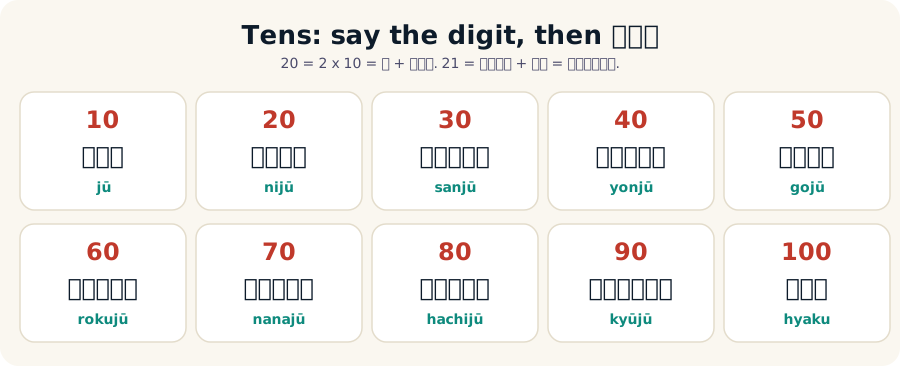
ten + one: 11 = じゅういち. Two tens + one: 21 = にじゅういち.
| Number | Hiragana | Romaji | How it is built | Listen |
|---|---|---|---|---|
| 11 | じゅういち | juuichi | 10 + 1 | ▶ |
| 12 | じゅうに | juuni | 10 + 2 | ▶ |
| 15 | じゅうご | juugo | 10 + 5 | ▶ |
| 20 | にじゅう | nijuu | 2 x 10 | ▶ |
| 21 | にじゅういち | nijuuichi | 2 x 10 + 1 | ▶ |
| 30 | さんじゅう | sanjuu | 3 x 10 | ▶ |
| 40 | よんじゅう | yonjuu | 4 x 10 | ▶ |
| 50 | ごじゅう | gojuu | 5 x 10 | ▶ |
| 70 | ななじゅう | nanajuu | 7 x 10 | ▶ |
| 99 | きゅうじゅうきゅう | kyuujuukyuu | 9 x 10 + 9 | ▶ |
100, 1000 and 10,000
| Number | Hiragana | Romaji | Note | Listen |
|---|---|---|---|---|
| 100 | ひゃく | hyaku | ▶ | |
| 200 | にひゃく | nihyaku | ▶ | |
| 300 | さんびゃく | sanbyaku | sound change: hyaku → byaku | ▶ |
| 600 | ろっぴゃく | roppyaku | sound change: hyaku → ppyaku | ▶ |
| 800 | はっぴゃく | happyaku | sound change: hyaku → ppyaku | ▶ |
| 1,000 | せん | sen | ▶ | |
| 3,000 | さんぜん | sanzen | sound change: sen → zen | ▶ |
| 8,000 | はっせん | hassen | sound change | ▶ |
| 10,000 | いちまん | ichiman | いち is always said before まん | ▶ |
Japanese counts in units of 10,000 (まん), not in lakhs as in Nepali. So 100,000 is じゅうまん (10 x 10,000) and 1,000,000 is ひゃくまん (100 x 10,000). It feels different from लाख and करोड, so practise with real prices.
Money: yen and rupees
| Japanese | Romaji | नेपाली | English | Listen |
|---|---|---|---|---|
| えん | en | जापानी मुद्रा | yen, the Japanese money (円) | ▶ |
| ひゃくえん | hyaku en | सय येन | 100 yen | ▶ |
| ごひゃくえん | gohyaku en | ५०० येन | 500 yen | ▶ |
| せんえん | sen en | हजार येन | 1,000 yen | ▶ |
| いちまんえん | ichiman en | दश हजार येन | 10,000 yen | ▶ |
| ルピー | rupii | रुपैयाँ | rupee (katakana, as a foreign word) | ▶ |
| いくらですか | ikura desu ka | कति पर्छ? | how much is it? | ▶ |
| Japanese | Romaji | नेपाली / English | Listen | |
|---|---|---|---|---|
| A | これは いくらですか。 | kore wa ikura desu ka. | यो कति पर्छ? How much is this? | ▶ |
| B | ひゃくごじゅうえんです。 | hyaku gojuu en desu. | सय पचास येन। It's 150 yen. | ▶ |
| A | それも ください。 | sore mo kudasai. | त्यो पनि दिनुहोस्। Please give me that too. | ▶ |
| B | ぜんぶで さんびゃくえんです。 | zenbu de sanbyaku en desu. | जम्मा तीन सय येन। That's 300 yen in total. | ▶ |
Time: o'clock
Add じ (ji) to a number for the hour: ごじ (5:00). Three irregular ones: よじ (4:00, not よんじ), しちじ (7:00) and くじ (9:00).
| Japanese | Romaji | नेपाली | English | Listen |
|---|---|---|---|---|
| いちじ | ichiji | एक बजे | 1 o'clock | ▶ |
| よじ | yoji | चार बजे | 4 o'clock | ▶ |
| しちじ | shichiji | सात बजे | 7 o'clock | ▶ |
| くじ | kuji | नौ बजे | 9 o'clock | ▶ |
| じゅうにじ | juuniji | बाह्र बजे | 12 o'clock | ▶ |
| なんじですか | nanji desu ka | कति बज्यो? | what time is it? | ▶ |
Every ▶ button plays a clear computer voice, which is good for learning sounds and rhythm but is not a native speaker. Pitch (the rise and fall of the voice) can sound a little flat. Also listen to real Japanese as often as you can: videos, news for learners (NHK Easy), and Japanese people around you.
Check yourself
Try to answer every question before you look at the answers.
- Say 1 to 10 in Japanese.
- How do you say 15?
- How do you say 20?
- How do you say 99?
- What is 300 in Japanese?
- What is 600 in Japanese?
- What is 10,000 in Japanese, and which part must always be said?
- How do you ask the price?
- What time is よじ?
- Which readings are used in phone numbers for 0, 4, 7 and 9?
Answers
Count your correct answers. If you got fewer than 7 out of 10, read the lesson again and listen to the audio once more.
- いち, に, さん, よん (し), ご, ろく, なな (しち), はち, きゅう (く), じゅう.
- じゅうご (juugo).
- にじゅう (nijuu).
- きゅうじゅうきゅう (kyuujuukyuu).
- さんびゃく (sanbyaku).
- ろっぴゃく (roppyaku).
- いちまん. The いち (one) must be said.
- いくらですか。
- 4 o'clock.
- ゼロ, よん, なな, きゅう.
Comments
Loading comments…